
Collecting rare coins provides people with a great chance to find hidden treasures inside their small pockets.
Most people spend $0.25 without looking at the metal surface for any strange marks.
Professional collectors pay huge amounts of money and often search for specific mistakes appearing during the minting process.
Finding coins from the quarter errors list requires a lot of patience and a good eye for very small details.
Individuals use a magnifying glass and see tiny letters or shifted images on the coins more clearly.
Every mistake mentioned below has a unique history, making it special for the numismatic community.
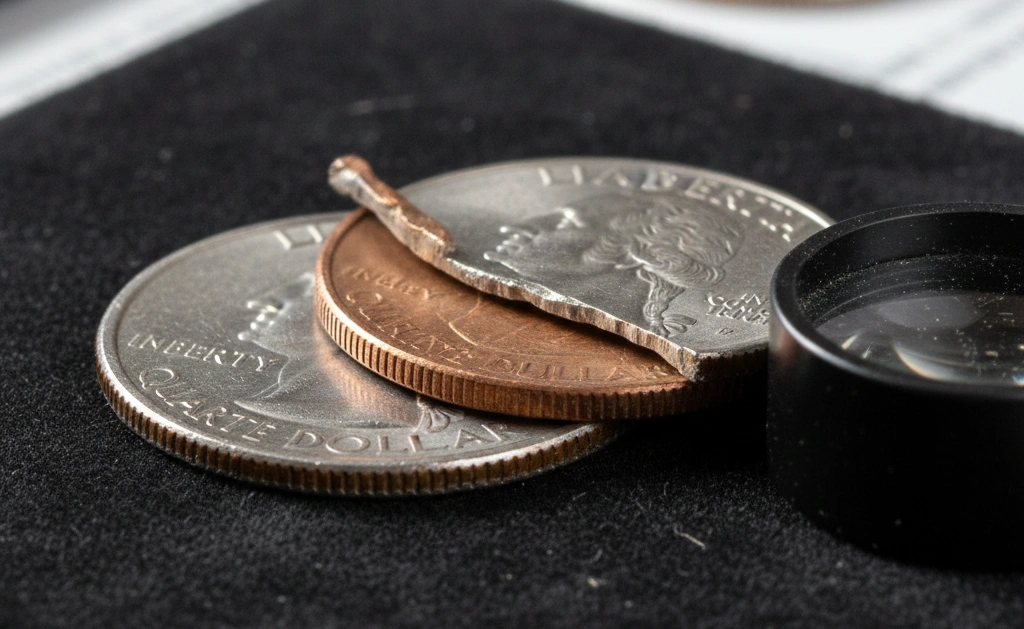
Why Some Quarters Cost Thousands of Dollars
The United States Mint produces millions of coins every year and uses heavy machines for this task.
These machines work at high speeds and sometimes make technical mistakes creating unique variations of the standard design.
Investors want to own rare things and compete for these coins during online auctions.
A perfect coin with a visible error creates a high demand among rich buyers.
The following list shows the most important errors found on American quarters over the last century.
Error Name | Record Price | Annual Growth | Rarity Level |
1932-D Washington Quarter | $143,750 | +12% | Very High |
1932-S Washington Quarter | $45,000 | +8% | Very High |
1943 Doubled Die Obverse | $17,000 | +15% | Rare |
1950-D/S Over-Mint Mark | $3,200 | +5% | Medium |
1964 Silver Quarter Error | $1,200 | +3% | Medium |
1970-S Over 1900 Proof | $35,000 | +20% | Very Rare |
1982 No Mint Mark | $500 | +4% | Common |
1999 Delaware Spitting Horse | $250 | +2% | Common |
2004-D Wisconsin Extra Leaf | $6,000 | +18% | Rare |
2005 Minnesota Doubled Die | $800 | +6% | Medium |
2005 Kansas "In God We Rust" | $150 | +1% | Common |
2021 Washington Crossing Delaware | $750 | +25% | New |
Off-Center Strike Quarters | $4,500 | +10% | Varies |
Broadstruck Quarters | $500 | +2% | Common |
Die Cap Errors | $8,000 | +14% | Very Rare |
1. 1943 Doubled Die Obverse
People look at the 1943 quarter and often notice blurry letters on the front side of the coin.
The auction record for this specific error reached $17,000 for a coin in a very high grade.
The price for this error increases by 15% every year because of the small number of known examples.
Collectors find this error in good condition and often sell it for $5,000 or more.
2. 1970-S Quarter Struck Over 1900 Canada Quarter
This error represents one of the strangest mistakes ever made by the San Francisco Mint.
A famous auction sold one example for $35,000 and made it a legend in the coin world.
The value of this unique piece grows by 20% annually as more investors enter the market.
Workers accidentally struck a 1970 quarter over an old Canadian coin and created a unique hybrid piece.
3. 2004-D Wisconsin State Quarter (Extra Leaf)
The Wisconsin State Quarter shows a corn ear having two different versions with extra leaves.
The record price for a perfect "High Leaf" version sits at $6,000 from a 2020 sale.
This coin sees an 18% rise in value each year due to the popularity of state quarters.
People checked their change with the coin value checker app and found thousands of these coins in the Midwest after the discovery.
4. 1932-D and 1932-S Washington Quarters
These coins were the first years of the Washington design and carry a high value even without big errors.
An incredible 1932-D quarter sold for $143,750 at a major auction.
The price for these key dates goes up by 8% to 12% every year depending on the metal quality.
Low numbers of coins produced in Denver and San Francisco make them very hard to find today.
5. 1950-D/S Over-Mint Mark
Engravers at the mint sometimes punched a new letter over an old letter by mistake.
A top-quality 1950-D/S quarter reached a record price of $3,200 recently.
The market value for this over-mint mark shows a steady 5% growth during every 12-month period.
A collector sees the letter "D" sitting on top of the letter "S" as a clear sign of a valuable coin.
6. 1964 Silver Quarter Errors
The year 1964 was the last year for silver quarters and makes all these coins more expensive than face value.
The highest price paid for a 1964 error quarter reached $1,200 at a public sale.
The price for silver quarters usually follows the metal market and grows by 3% annually.
Double die errors found on these silver coins increase the price significantly for the owner.
7. Off-Center Strike Mistakes
A machine fails to center the metal disk and creates a coin with a missing part of the design.
A quarter with a 70% off-center strike sold for $4,500 because of its unique look.
The annual price increase for these visual errors stays around 10% for the best pieces.
A quarter with only 50% of the image looks very unusual to the human eye.
8. 2005 Kansas "In God We Rust"
Grease filled the letter "T" in the word "Trust" and created a funny and famous error.
One of these coins in perfect condition sold for $150 to a specialist.
The price for this common error grows slowly by 1% each year as more people find them.
A person finds this coin in a pocket and earns $50 or $100 quickly.
9. Die Cap Errors
A coin gets stuck in the machine and becomes a "die cap" after many hits from the heavy press.
A very deep 1970-era die cap reached a record price of $8,000 in a private auction.
This category of errors shows a 14% increase in value per year because of the strange shapes.
This coin looks like a bottle cap and has a very deep shape with a distorted image.
10. 1999 Delaware "Spitting Horse"
A small crack in the metal die creates a line appearing to come out of the horse's mouth.
The record sale for a high-grade 1999 Delaware quarter with this crack is $250.
The value for this coin increases by 2% annually as new collectors join the hobby.
People sell these quarters on the internet and usually get a small profit for their discovery.
11. 2005 Minnesota Doubled Die
The Minnesota quarter shows many trees and often has doubling in the central part of the design.
A rare version with multiple extra trees sold for $800 at a specialized coin show.
The price for the best Minnesota errors rises by 6% every year, according to market data.
An extra tree appears next to the main image and signals a doubled die error.
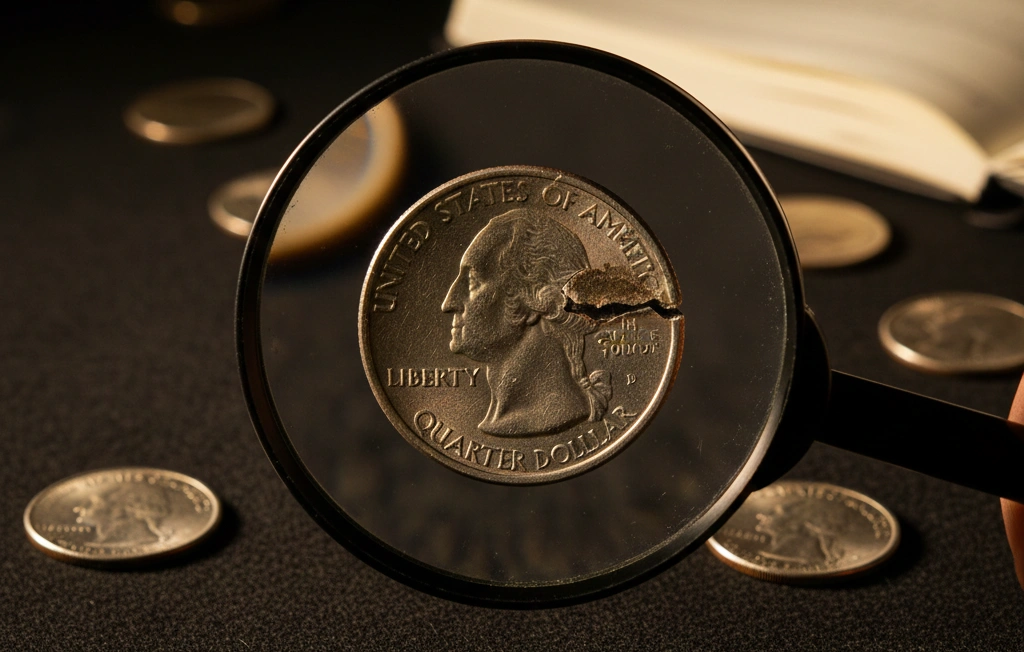
12. Broadstruck Quarters
A coin is struck without the protective collar and spreads out like a pancake on the edges.
The highest price recorded for a modern broadstruck quarter sits at $500 for a shiny piece.
The growth for these errors stays at 2% per year because they are found quite often.
This quarter is wider and thinner than a normal coin and lacks the ridges on the edge.
13. 1982 No Mint Mark
Quarters usually have a small letter "P" or "D" and show where the mint made the coin.
A perfect 1982 quarter without the mint mark sold for $500 in a recent auction.
The value for this mistake goes up by 4% annually as collectors finish their year sets.
Some coins from 1982 missed this letter and became a mystery for many years.
14. 2021 Washington Crossing the Delaware Errors
Newer coins also have mistakes and stay very interesting to the public right now.
A 2021 quarter with a large die chip on the hat sold for $750 recently.
This new error sees a 25% price jump every year because it is currently very popular.
Doubling on the hat or the sword of George Washington appears on some 2021 pieces.
15. Blank Planchet Quarters
Sometimes a piece of metal goes through the machine and receives no image at all from the dies.
A heavy silver quarter blank planchet from before 1964 sold for $2,000 to an expert.
The price for certified blank planchets increases by 7% annually due to the high demand.
A certified blank quarter provides a good return on a $0.25 investment.
How to Check Your Quarters Properly
Starting a collection requires only a few simple tools and a little bit of time.
A person looks at coins under a bright lamp and reveals scratches or marks hidden in the dark.
Grouping your coins by year makes the searching process much faster and more organized.
Collectors use a book about coin values and learn about the history of every quarter.
Keeping your finds in a safe place protects the metal from air and moisture.
Taking pictures of your coins allows you to share your discoveries with experts online.
A person asks for advice from professional dealers and avoids selling a rare coin too cheaply.
Important Steps for Success
Buy a high-quality magnifying glass
Use the coin identifier app
Study the standard design of every quarter
Visit local coin shows to meet other people
Read books about the minting process
Avoid cleaning your coins with chemicals
Cleaning a rare coin usually ruins the value and makes collectors lose interest.
Leaving the natural color on the metal remains the best way to preserve the item.
Many people make this mistake and lose hundreds of dollars by trying to make the coin shiny.
